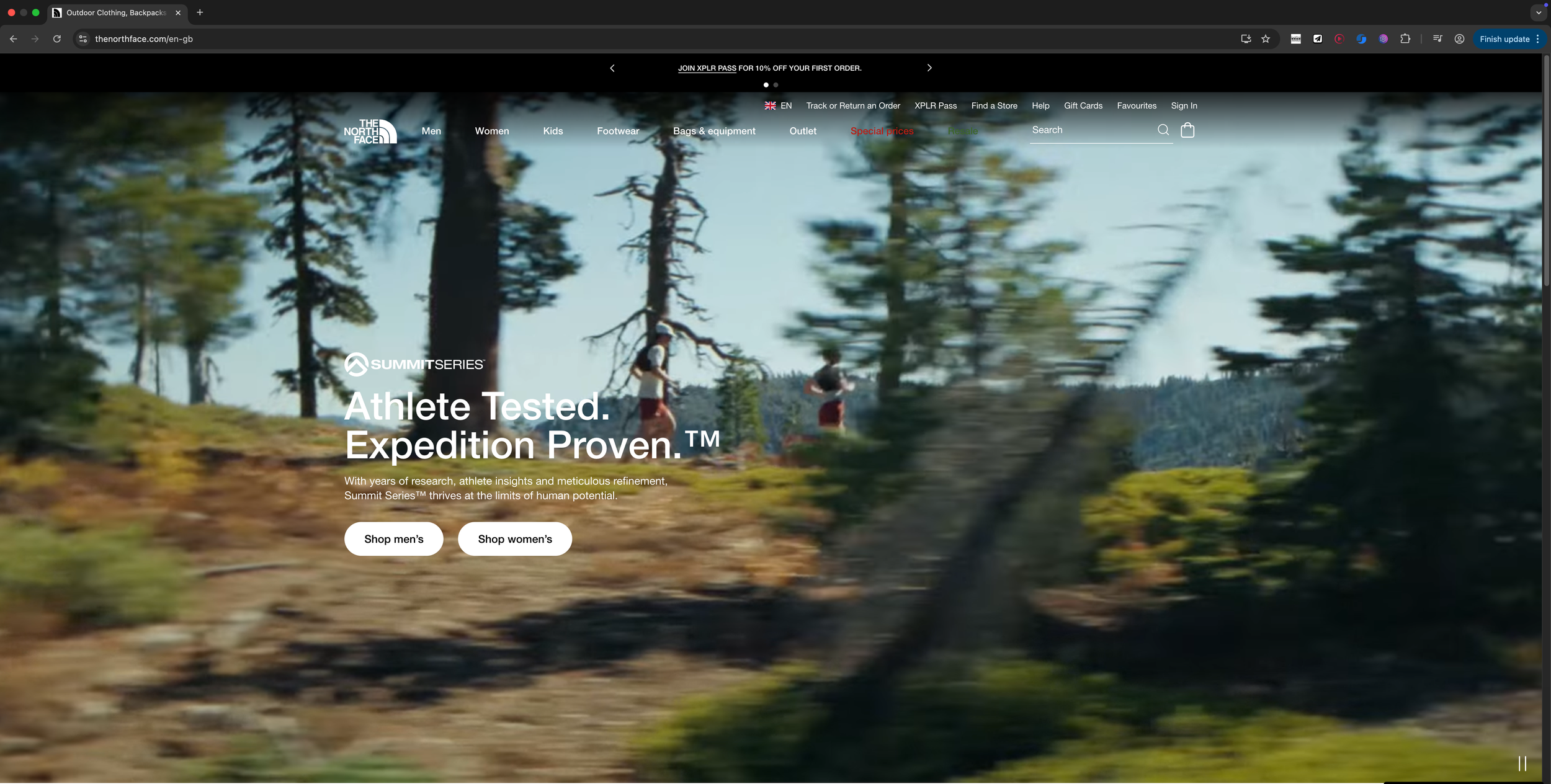
THE NORTH FACE — Global Campaign 2026
Creative Direction & Full Post-Production : How we brought the 2026 Global Trail running and Climbing campaign launch to life.
The North Face handed over terabytes of footage and a rough creative direction. No detailed brief, just raw material, full creative trust, and one clear outcome: deliver their global campaign across trail running and climbing, from concept to final cut.
The scope
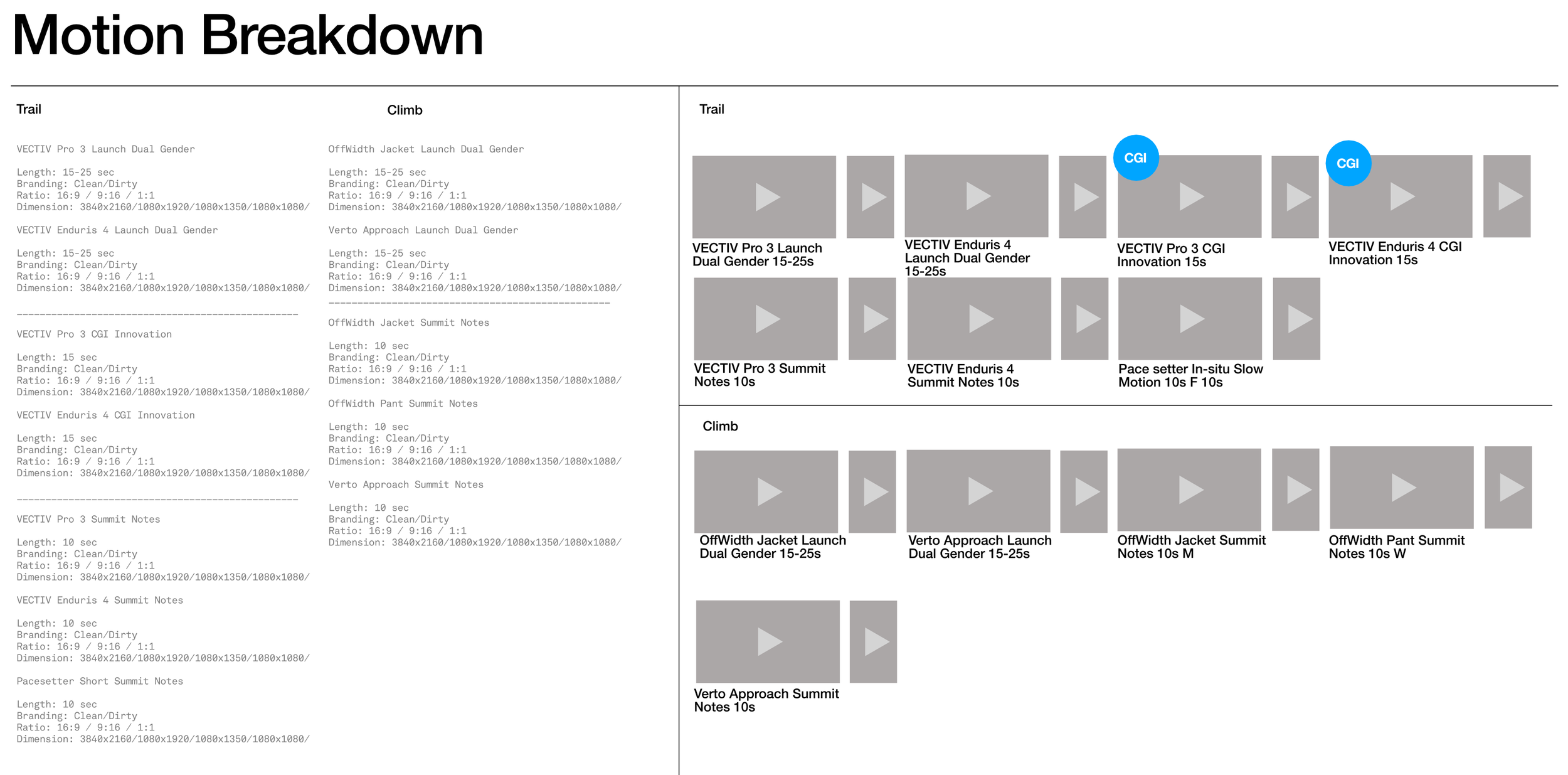
4 Hero films (each built around a specific product launch) designed as a unified body of work.
2 hype edits.
6 standalone videos.
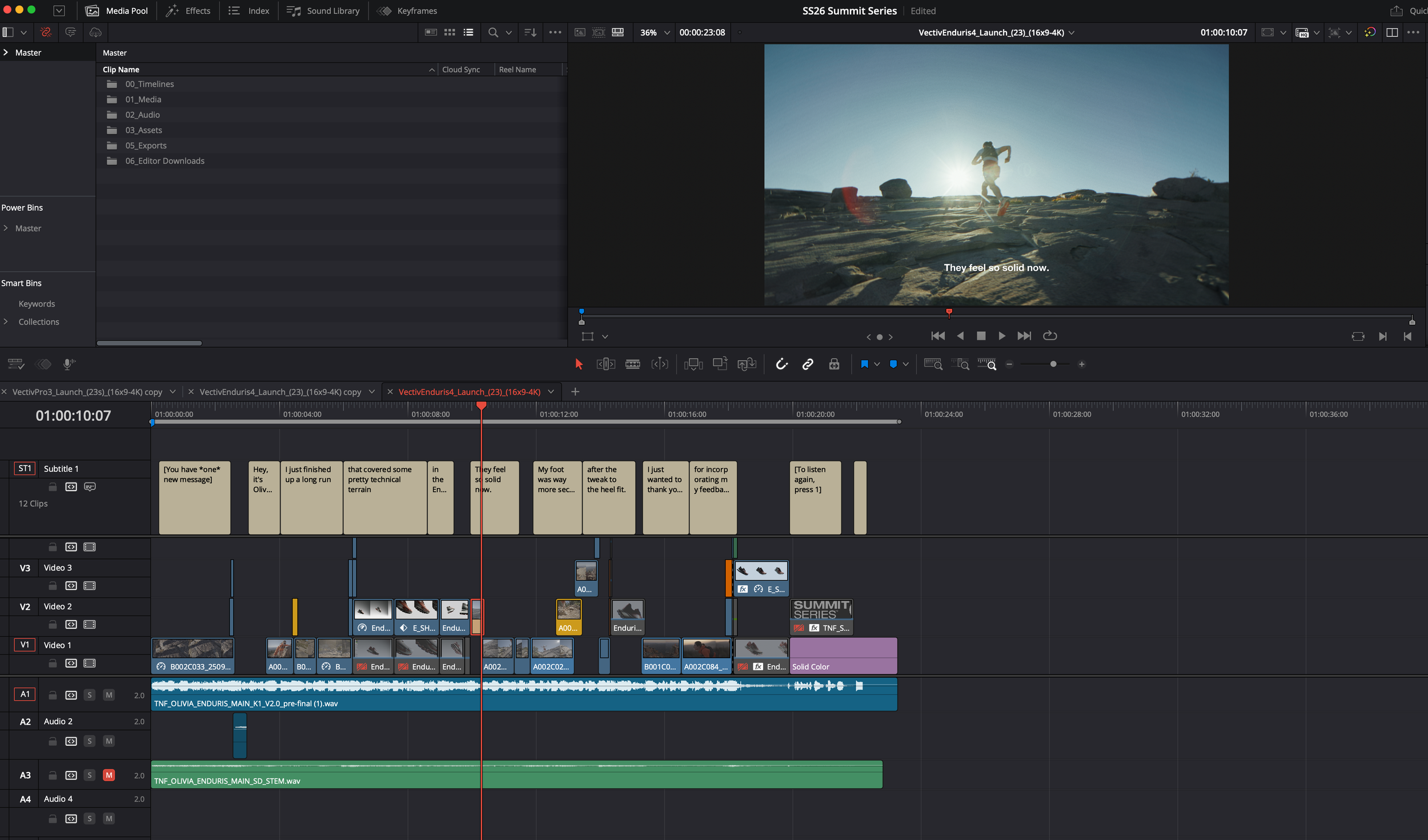
Each master declined across every distribution format such as 4:5, 4:3, 9:16, 16:9 (clean and dirty, subtitled and unsubtitled, with and without VO, with and without final mix). Site, retail, social media.
Somewhere between 80 and 120 final deliverables.
The concept :
These products were built with athletes. Not just tested by them.
The films had to reflect that. Real feedback. Real terrain. Real performance.
No talking heads. No product demos. Just athletes and the gear they helped create, with a strong message.
How we worked
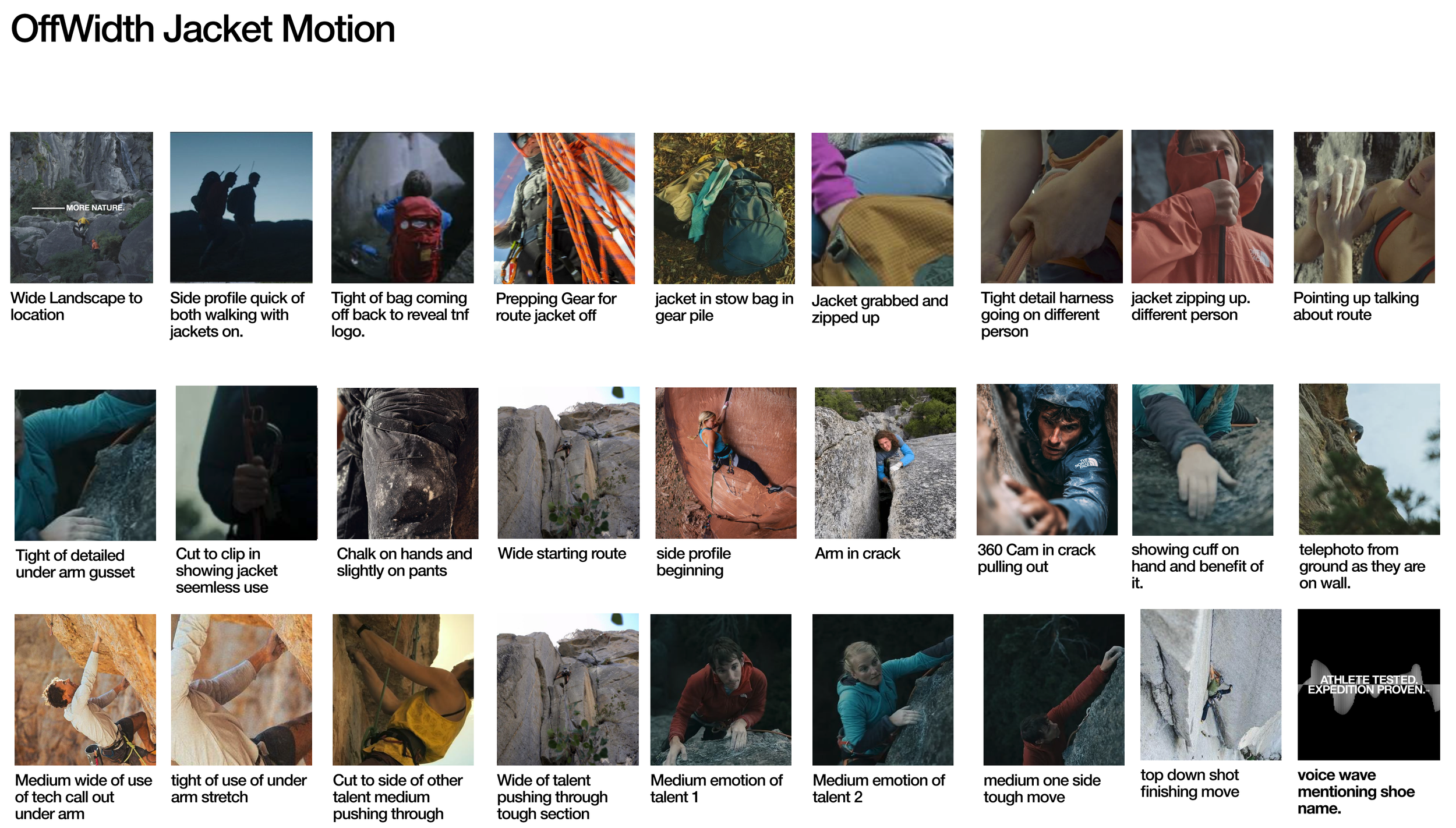
Before a single frame was cut, we established the creative architecture:
Visual rules
VO copywrtiing
Sound design intention
Format hierarchy.
Every decision downstream had a clear reference point. Maybe an old habit from my engineer life, but this is how things can move fast and precisely in my opinion.
Execution was iterative. Constant validation with TNF at each stage.
A small, dedicated team — one creative director, one composer — in permanent dialogue with the brand.
What we delivered
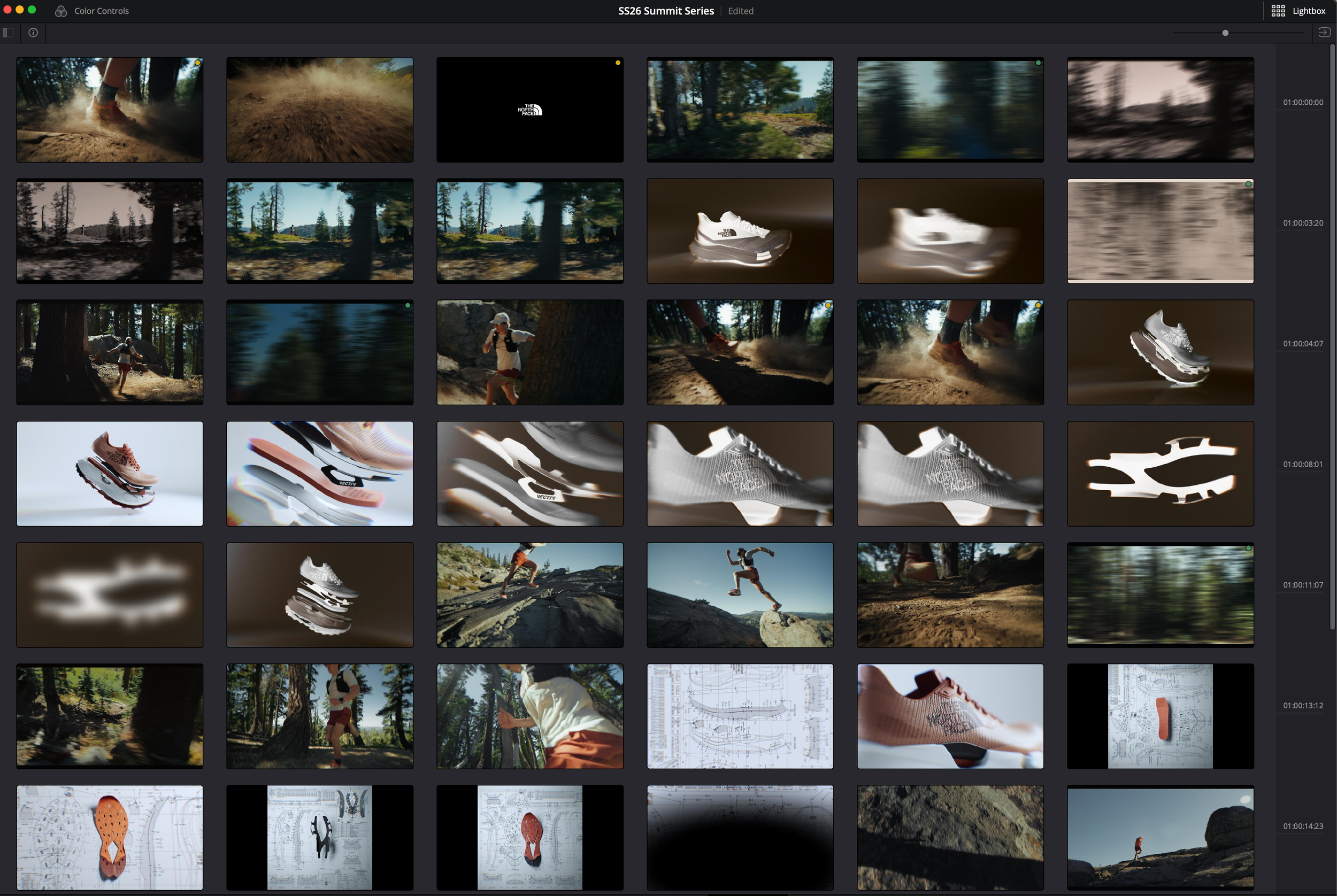
Creative concept. Four films built around specific products and athletes. Each one distinct. All of them part of the same body of work.
VO copywriting. Written and refined with TNF. Every word earned its place against the image.
Color grading. A unified visual language, consistent across all formats and aligned with the campaign photography.
Original music & sound design. A score for each hero film — built to carry the emotional arc. Sound design and music treated as one system, not layered separately.
3D asset integration. Original compositions embedded into the visual system from day one, not added in post.
Production planning & delivery. Full post-production retro-planned before touching a single clip. An old habit from my engineer life.
Picture lock, sound, color, final mix, exports: each stage locked before the next began. 100+ assets across every required format, platform, and spec. No surprises at the end.
Why it works
Before filmmaking, I spent 7 years as an aerospace engineer.
Precision at volume. Zero margin for error. Environments where mistakes had real consequences.
The stakes are different now. The standard isn't.
Here's what that looks like in practice:
One point of contact. Every brief, every revision, every asset handled through a single creative lead who knows the project as well as you do. From the first frame to the final export.
Revisions in real time.
No version control disasters. 100+ assets across multiple formats, platforms, and spec requirements without drift or error is a systems problem. One I've solved before.
Nobody cares how the kitchen runs. They care what comes out of it.
The creative moves fast because the structure underneath is solid. Not the other way around.